

A Message from Interim Director of Policy and Movement Building
 Dear Family Child Care Advocates,
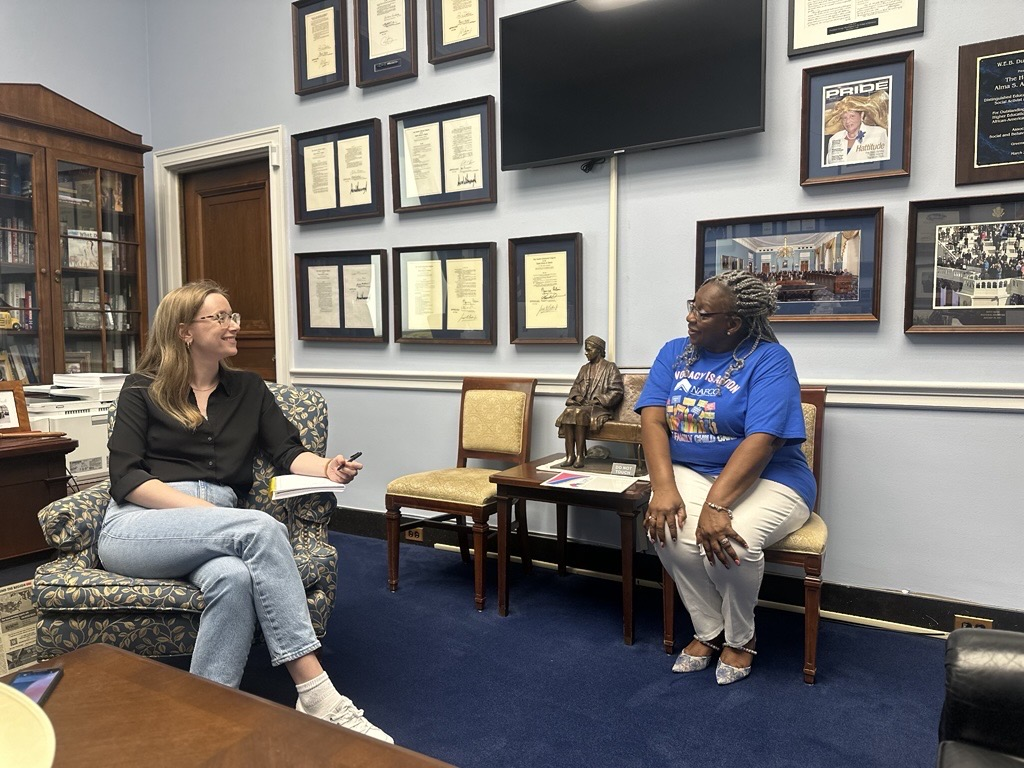
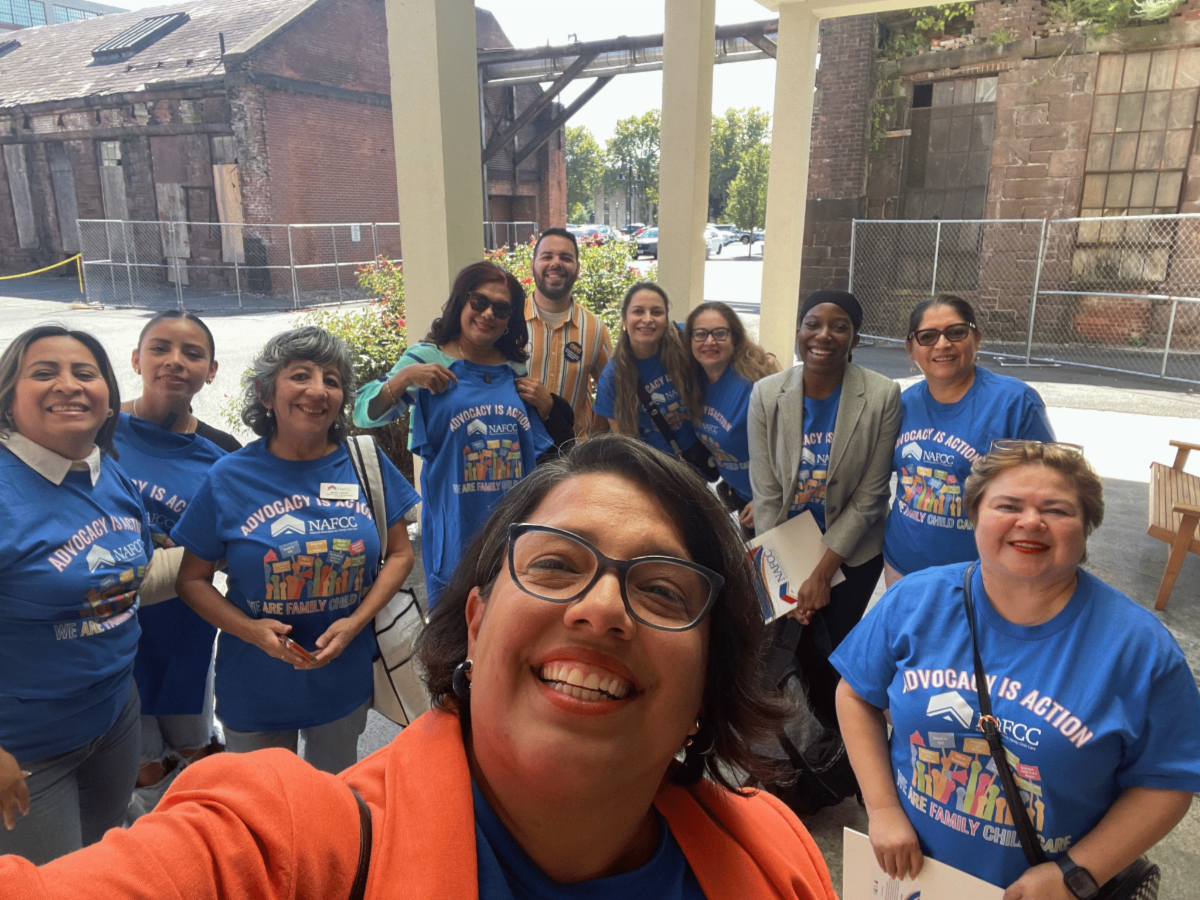
This August, educators across the country showed what advocacy looks like in action. From FCC home visits to meetings in D.C., you made sure members of Congress heard directly from the people shaping early care every day. Your voices carried a clear message: family child care must be funded, respected, and included in every policy conversation.
Now, in September, that momentum doesn’t stop. Federal budget debates, child care funding decisions, and state-level policy shifts are all on the horizon. The stakes are high, but so is our collective power. Advocacy is not a one-time event; it is a movement, and you are at the center of it.
This newsletter is about keeping you connected to that movement. Inside, you’ll find updates on federal negotiations, state wins, and opportunities to raise your voice. More than anything, I want you to see how your advocacy is shaping the future of family child care. Together, we are proving what’s possible when educators, allies, and communities stand united.
In solidarity,
Eboni Delaney
Interim Director of Policy and Movement Building
National Association for Family Child Care (NAFCC)
Congressional Update: FY2026 Continuing Resolution and Government Shutdown
As of midnight on October 1, 2025, the federal government has entered a shutdown following Congress’s failure to reach an agreement on a continuing resolution (CR) to fund operations for Fiscal Year 2026.
The Trump Administration has released contingency plans outlining how federal agencies will operate during the shutdown. These plans classify staff and services as either “essential” or “non-essential.”
U.S. Department of Health and Human Services (HHS)
The HHS plan calls for furloughing approximately 41% of staff. While immediate impacts to the Child Care & Development Block Grant (CCDBG) and Head Start programs are expected to be limited, a prolonged shutdown beyond November 1 could disrupt services, delay reimbursements, and limit agency capacity.
The House of Representatives is not expected to reconvene until Monday, October 6, placing the focus squarely on the Senate as it considers another vote on a short-term extension.
A recent article by The New York Times explains how current budget maneuvers—including the possibility of a pocket veto—could establish long-term precedents if Congress fails to act. Read the article here.
What to Expect During the Government Shutdown
With Congress failing to act by the final deadline, the shutdown has begun and will impact federal programs on different timelines. Based on current guidance:
Head Start / Early Head Start
Many grantees have received partial FY2025 funding through March or April 2025. Programs with later funding cycles could face gaps if the shutdown extends beyond those dates.
Child Care & Development Block Grant (CCDBG)
States have already received partial FY2025 discretionary awards. Because states have two years to obligate these funds and receive an annual $3.5 billion in mandatory funding, most should be able to maintain current enrollment levels in the short term. However, flat funding during a period of inflation reduces real purchasing power and may delay planned improvements.
Essential Services Continue Amid Shutdown Uncertainty
While the government shutdown halts many federal operations, some core health and nutrition programs continue to operate under existing mandatory or advance funding. However, without swift congressional action, even these essential services may experience disruptions in the weeks ahead—particularly in oversight, reimbursements, and administrative support.
Medicaid and CHIP
Medicaid and the Children’s Health Insurance Program (CHIP) remain operational under mandatory funding. States can continue processing provider payments and benefits. However, prolonged shutdown conditions could slow eligibility redeterminations or cause delays in federal reimbursements if key administrative staff are furloughed.
CACFP (Child and Adult Care Food Program)
The CACFP program is continuing to issue reimbursements using USDA’s advance funding authority. For now, family child care educators and centers participating in CACFP should continue receiving payments. However, USDA staffing reductions could slow oversight, technical assistance, and reimbursements—especially for small providers without financial buffers.
Implications for FCC Educators
For family child care educators, a prolonged government shutdown could result in:
- Delayed subsidy payments and nutrition reimbursements
- Uncertainty around new grant awards or planned rate increases
- Disruption of services for programs already operating on tight margins
NAFCC remains committed to keeping educators informed and advocating for the resources and recognition FCC programs need to thrive.
Updates on Child Care and Development Block Grant (CCDBG) / CCDF Allocations
Every year, the federal government allocates Child Care and Development Block Grant (CCDBG) funding to states through the Child Care and Development Fund (CCDF). These funds are intended to:
- Help families afford child care through subsidies
- Support program quality, workforce development, and training initiatives
- Address other child care needs as determined by each state
Allocations are based on a federal formula that considers:
- The number of young children living in the state
- The number of children eligible for free or reduced-price school lunch
- The state’s income level
These funds are a cornerstone of state child care systems and are especially critical for family child care (FCC) educators, who depend on timely, consistent subsidy payments and quality investments to sustain their programs.
Potential Impacts for Family Child Care (FCC)
Reduced Flexibility for States
With reduced or delayed allocations, states may serve fewer families, tighten eligibility criteria, or scale back quality initiatives. FCC educators, who often serve subsidy-reliant children, are directly affected by these decisions.
Delayed or Redirected Investments
States that had planned to raise provider pay or increase subsidy reimbursement rates may instead redirect funds just to sustain existing services. FCC educators may not see the compensation or support they expected.
Competition for Resources
Larger systems often have more staff and influence at the state level. Without intentional advocacy, FCC programs risk being sidelined—even though they provide critical care in underserved communities.
Strain on Sustainability
Many FCC educators operate on thin margins. Any reduction or delay in subsidy funding jeopardizes financial stability, leading to closures and reduced access to care.
An Advocacy Opportunity
Family child care delivers what other systems cannot: care for infants, toddlers, and mixed-age groups in communities where no other options exist. Thousands of FCC educators are nationally accredited by NAFCC, demonstrating high quality and accountability. Policymakers must understand that investing in FCC is one of the most effective ways to preserve family access to care.
NAFCC remains committed to keeping educators informed and advocating for the resources and recognition FCC programs need to thrive.
State Policy Updates: A Story of Progress and a Signal for Change
Two patterns have emerged in state policies impacting family child care this year.
Some states have made historic investments in early care and education, which will benefit family child care educators and the families they serve. We’re learning from new investments in places like New Mexico, Connecticut, and Massachusetts, where strategies have included increased rates, dedicated funding, and intentional inclusion of FCC voices in planning and implementation.
Read more in this resource from the Children’s Funding Project
At the same time, we are hearing from educators in several states about abrupt changes that are dismantling core components of the child care system in plain sight. Educators have reported:
- Sudden changes to subsidy payment structures
- New or unclear insurance requirements
- Reduced or delayed CACFP reimbursements
- Increased administrative burdens without additional support
- Loss of children and families due to shifting eligibility or funding gaps
These disruptions are forcing some programs to close or scale back, leaving families without care and educators without income.
As an example, read more about what’s happening in Arkansas.
Data from the 2024–2025 Annual Survey reflects what we’re hearing on the ground: educators are working more than 50 hours per week, earning less than $15/hour after expenses, and are still excluded from many of the decisions that impact their livelihoods.
NAFCC continues to call for urgent investment, stability, and recognition of family child care as a vital part of the child care system.
We want to hear from you. What wins or challenges are you facing in your state?

In Case You Missed It: NAFCC’s Latest Policy Webinar
Congress is back in session, and the coming months hold significant implications for family child care. Our latest policy webinar broke down the proposed House appropriations bill and other federal measures now under debate.
We also highlighted the impact of August Advocacy, which saw educators hosting visits in their homes and meeting directly with congressional staff, ensuring that family child care voices were shaping these conversations in Washington.
Participants gained a clear understanding of where federal funding and regulations stand today, and what’s at stake for the stability and future of FCC.
Watch the replay here.
Passcode: Z833+t6^
Spanish Interpretation
Stay informed and connected as we continue advocating for policies that support FCC educators and small business sustainability!
Advocacy is Action: NAFCC Brings FCC Educators and Congress Together in District Meetings
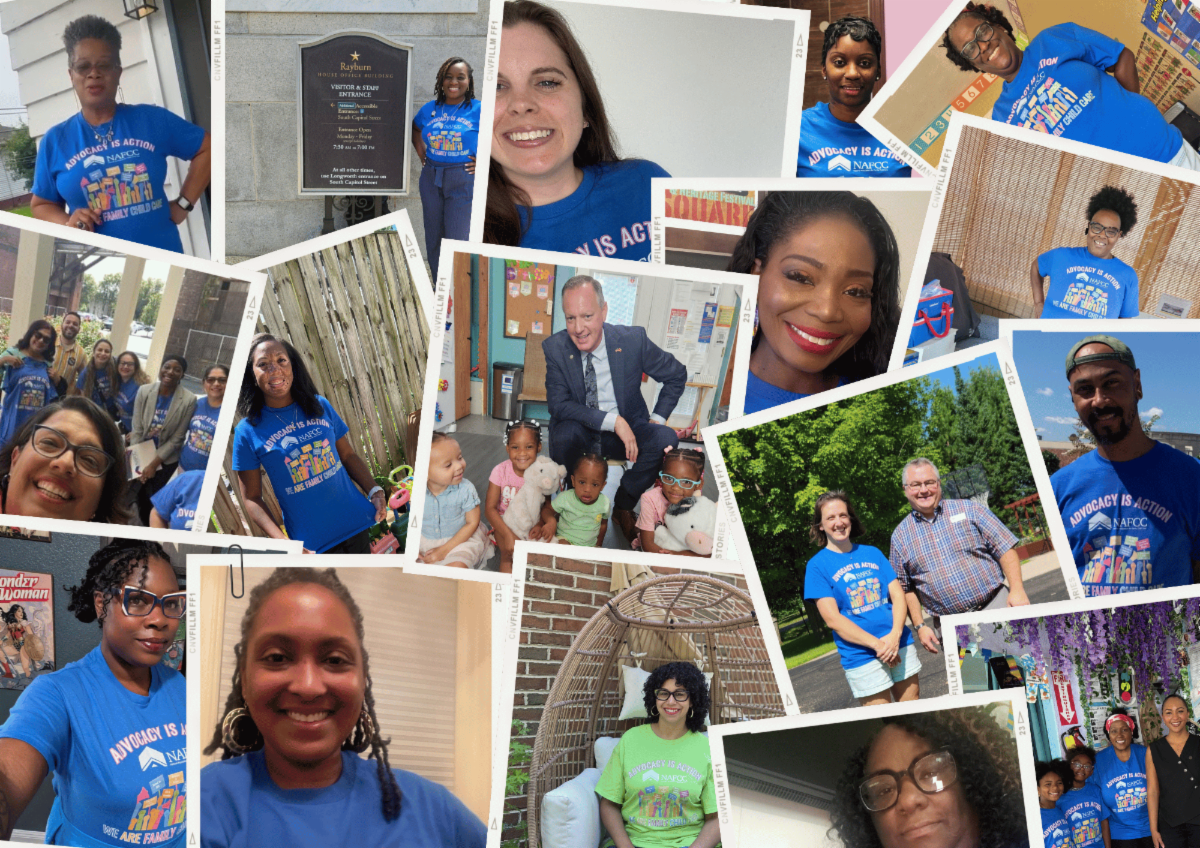
In August, NAFCC coordinated meetings between family child care educators and Members of Congress during the August recess. From FCC home visits to district office conversations, educators shared their stories, highlighted the critical role of family child care, and urged lawmakers to fully fund CCDBG, strengthen Head Start, and ensure FCC voices are included in every policy decision. These meetings demonstrate the power of advocacy and the impact educators make when they speak directly to decision-makers.
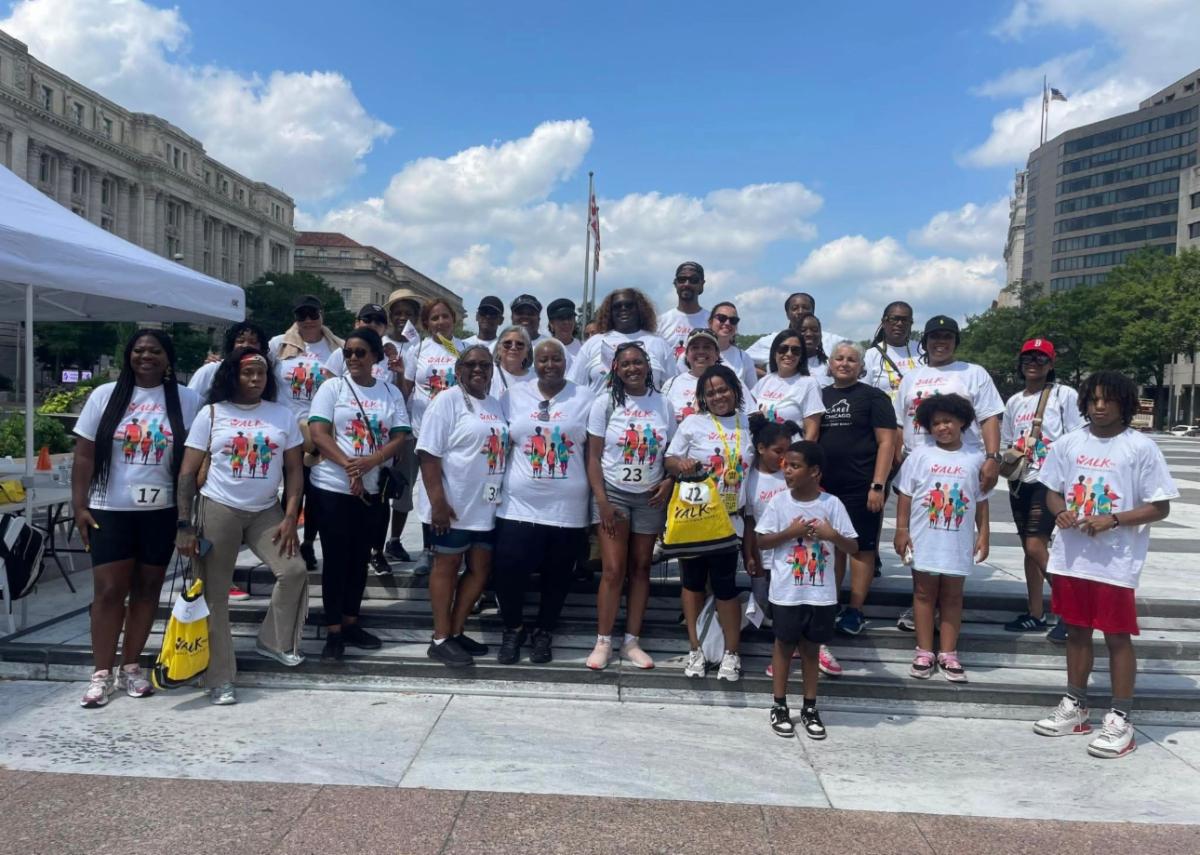
Family child care educators from North Carolina, Texas, Mississippi, and beyond joined together in Washington, D.C., for the First Amendment Walk for Family Child Care, led by the DC Family Child Care Association, an NAFCC Affiliate, and its Executive Director and NAFCC State Representative, Cynthia Davis.
NAFCC Executive Director Erica Phillips, Board President-Elect Yvette Sanchez Fuentes, Board Member Vantoinette Savage, and NAFCC staff proudly stood alongside educators, emphasizing that family child care is essential infrastructure.
At the same time, educators across the country walked in their own states in solidarity, proving that when we walk together, our voices are amplified.

NAFCC Home-Based Family Child Care Global Learning Convening Plenary Panel
The Home-Based Family Child Care Global Learning Convening marked a historic moment for family child care. Hosted by the National Association for Family Child Care, this first-of-its-kind gathering brought together educators, advocates, and leaders from across the globe to highlight the stories, strategies, and strengths of multilingual and culturally rooted educators shaping home-based care.
With generous support from the Robert Wood Johnson Foundation and the Aspen Ascend Impact Fund, the convening became a space where global perspectives met shared purpose. Participants from multiple continents came together to exchange ideas, uplift diverse experiences, and recognize that while family child care may take many forms, its foundation is universal: relationships, resilience, and respect.
Global Voices, Shared Vision
A centerpiece of the convening was the plenary panel: Global Voices, Shared Vision. Educators from Ecuador, Bangladesh, South Africa, and the United States shared their lived experiences and cultural insights, weaving together a conversation on language, identity, and leadership. Their voices expanded the global understanding of home-based child care, reminding us that across borders, family child care educators are not only caregivers, but leaders shaping communities.
The convening affirmed what many have long known: family child care is a global movement, built on the strength and wisdom of educators everywhere.

Wisconsin Educator Corrine Hendrickson featured by TIME
Corrine Hendrickson, a family child care educator with over 18 years of experience, was recently featured by TIME. After nearly two decades of operating Corrine’s Little Explorers in rural Wisconsin, rising costs and disappearing subsidies forced her to close her program at the end of August.
Her story reflects the reality that many families and family child care educators know all too well. When programs close, communities lose trusted care, parents lose stability, and children lose a place where they feel safe and supported. Corrine’s experience underscores the urgent need for recognition and investment in family child care.
Acknowledging Corrine’s leadership and advocacy helps illuminate the contributions of educators across the country whose work is too often invisible. Recognition matters because it affirms the value of family child care, builds public awareness, and strengthens the case for policies that ensure educators have the resources to continue serving children and families.
Read the article here.
Learn more about Corrine

Spotlight on Virginia
The Virginia Alliance of Family Child Care Association will screen the We Are Family Child Care documentary during its annual conference on October 11. This powerful film, produced in partnership with NAFCC, uplifts the voices and experiences of family child care educators nationwide.
Conference participants will view the documentary together and engage in conversations about FCC’s role in their communities and across the country.

This month’s In Their Own Words blog features Carolyn Collins, a veteran family child care educator from St. Paul, MN. What began in 1983 as a way to stay home with her daughter grew into a lifelong calling, spanning four decades of care, community, and professional growth.
Read how Carolyn turned lived experience into leadership, pursued higher education while running her program, and continues to inspire educators and families today.

Level Funding Means Fewer Children Reached Through CCDBG
CLASP has released a new fact sheet analyzing the state-by-state impact of the FY26 House-proposed level funding for the Child Care and Development Block Grant (CCDBG). The analysis shows that stagnant funding could result in up to 24,000 children losing access to care in FY26 — on top of the losses already felt from flat funding in FY25.
In this challenging budget environment, advocates know that flat funding may be the best-case scenario. Yet it is also clear that children and families deserve more. This new resource offers valuable data to strengthen advocacy efforts and keep the urgency of child care funding at the forefront.

Breaking Myths: How Family Child Care Educators Harness Technology
In this issue of VOICES, Mia Pritts of Opportunities Exchange and Erica Phillips of the National Association for Family Child Care challenge outdated myths about family child care and technology. They show how educators are embracing digital tools to streamline operations, improve communication, and strengthen their programs. The feature follows Washington, D.C. educator Angelique Marshall, whose intentional shift from paper systems to personalized tech demonstrates how innovation, guided by relationships and real needs, empowers both educators and families.
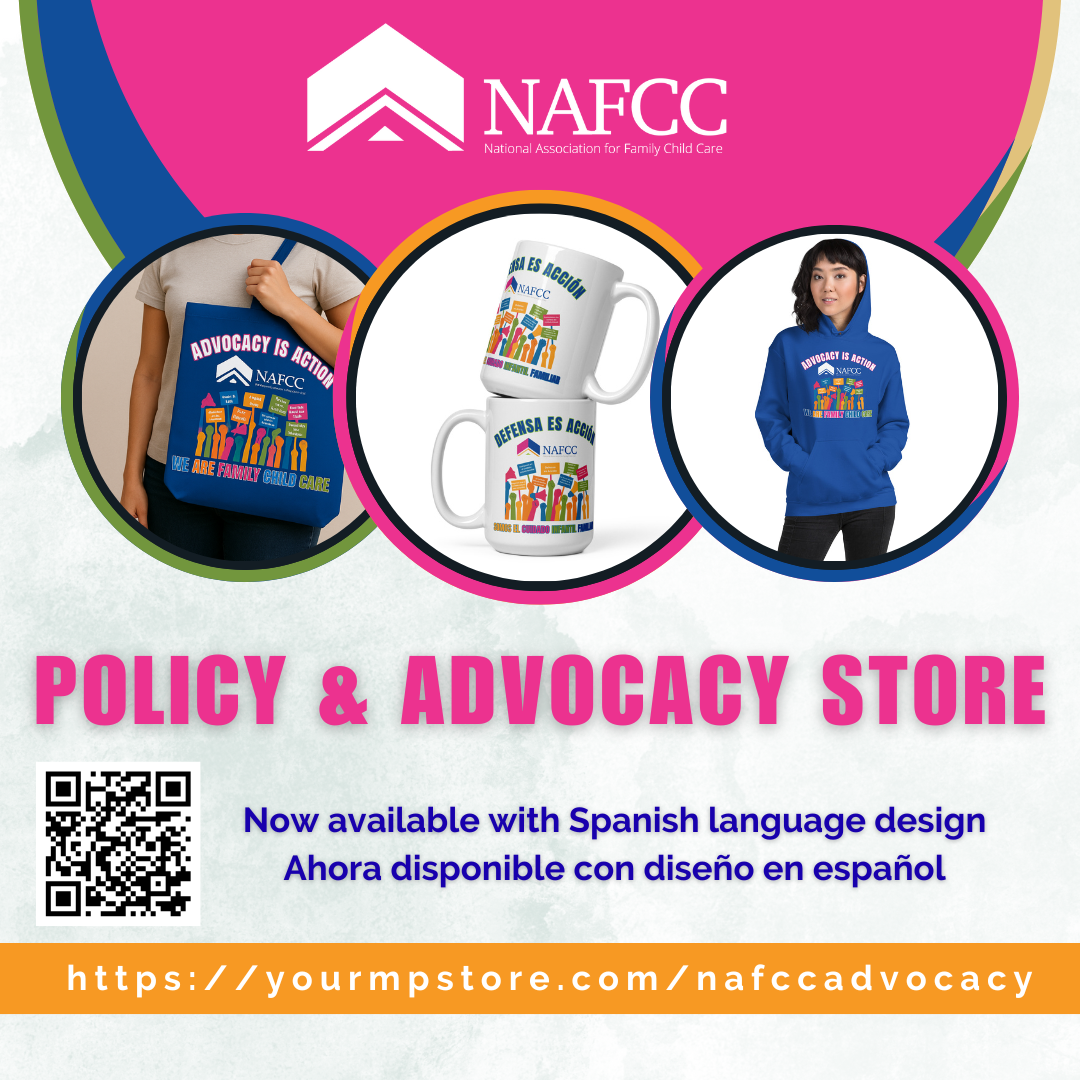
Shop the NAFCC Policy and Advocacy Store!
Whether you are just beginning your advocacy journey or you are a seasoned advocate, you have the power to show our collective strength. The Advocacy is Action collection is here with bold designs, meaningful messages, and gear that speaks for family child care.
All products are available in English and Spanish. Wear it, share it, and let your community know: Advocacy is Action, and we won’t be ignored.